
In short
- The federal construction sanitation rule requires employee toilets; listed toilet types for sites without sanitary sewers remain subject to local codes.
- Workforce size sets minimum facilities: federal rule's table.
- Mobile crews with ready transport to nearby toilets have a specific exception under the same rule.
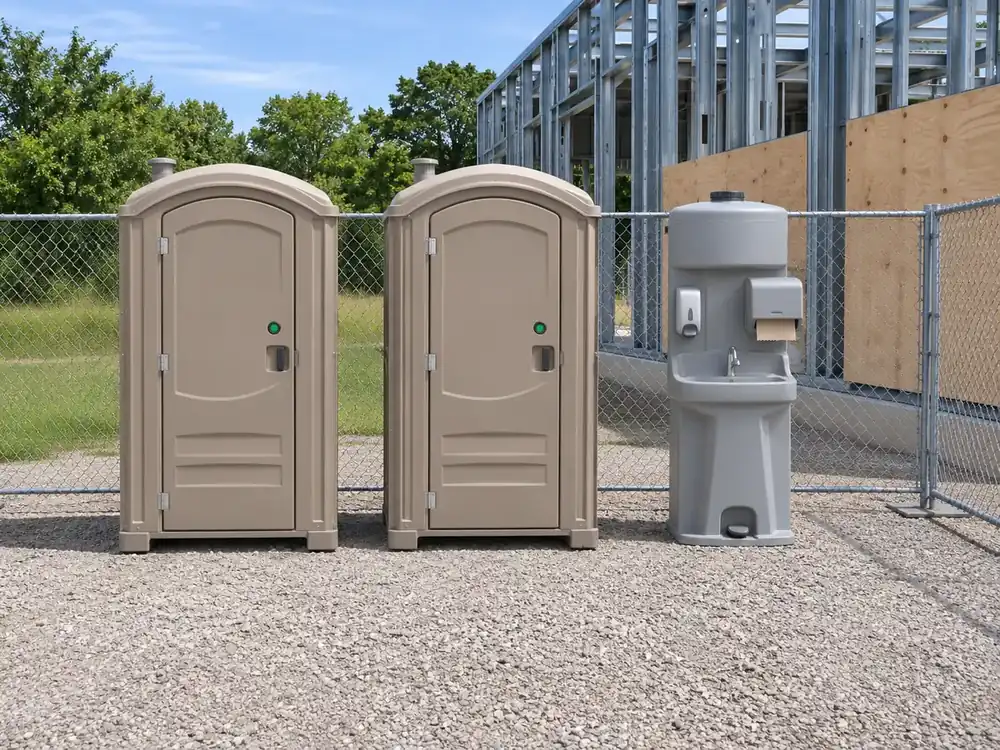
Employee Toilet Access and Washing Facilities
The employer must provide toilets for construction employees under the federal sanitation rule. Start the rental conversation with the workforce, the work area and the facilities already available. Call with a project description; detailed layout decisions can follow as the site plan develops.
Construction Site Toilet Requirements
The federal rule addresses employee facilities and lists permitted toilet types for sites without a sanitary sewer, unless local codes prohibit them, in its construction sanitation provisions. The rule sets duties for the job site; it does not choose a rental brand or booking arrangement.
OSHA portable toilet requirements begin with the workforce: Table D-1 lists one facility for 20 or fewer employees, with separate toilet-seat and urinal ratios for larger groups. Review the applicable row with the employer's safety lead as staffing changes.
Small Crews and Mobile Work
A small crew is still covered by the toilet table, while temporary field conditions require at least one available facility under the rule text. The mobile-crew exception requires ready transportation to nearby toilets; OSHA distinguishes workers moving between sites from workers based at a conventional project in its mobile-crew interpretation. Treat crew size and mobility as separate questions.
Washing Facilities and the Work Being Done
Washing needs depend on the work and the facilities provided. The washing provisions require lavatories, hot and cold or tepid running water, soap or similar agents, and drying provisions, with a transportation-based exception for mobile crews or normally unattended locations. Work involving potentially harmful contaminants requires nearby washing facilities equipped to remove those substances under the same provisions.
Portable toilet requirements for workers therefore deserve a washing discussion alongside the toilet discussion. Ask the safety lead about the tasks and exposure, and discuss the proposed hand-wash station or portable sink with your service pro. Describe any existing water connection rather than assuming a particular station suits the work.
Public Use and Construction Personnel
Public use changes the accessibility discussion. The ADA Standards address toilet rooms, portable-unit clusters and accessible routes, while providing a specific exception for portable units exclusively used by construction personnel. If visitors will use the restrooms, discuss that use with the project safety lead and the office reviewing the site. Describe the approach surface as well as the unit.
Decisions for the Safety Lead and Delivery Driver
The rule establishes sanitation duties; the employer and rental discussion still need to address the actual site. Bring uncertainties about OSHA porta potty requirements to the employer's safety lead and the federal rule. Ask the village or city building office about the project's permit and proposed use of public space.
| Planning subject | Person to involve |
|---|---|
| Workforce and existing facilities | Employer's safety lead |
| Project permit and public-space use | Village or city building office |
| Unit choice and service visits | Your service pro |
| Standing area and truck route | Your delivery driver |
The construction site porta potty ratio is only part of the rental discussion. Work phases, rental duration, unit selection and service access affect the scope. One of our local portable toilet partners talks through those choices and the price before the units are scheduled.
Keep units on firm, level ground away from traffic, equipment, drains and overhead lines. Do not attempt to reposition a unit or raise it from the ground, and keep anyone from tipping it or climbing on it. Waste handling and pumping belong to your service pro; your delivery driver arranges service visits. Discuss changes in the work area so the approach remains usable.